India’s mutual fund industry is witnessing strong retail participation, with investor folios crossing 26.63 crore as of January 2026. Among the various categories, Small Cap Funds have gained significant attention for their long-term wealth-creation potential, despite carrying higher market risks.
This article compares three leading Small Cap Funds — Nippon India Small Cap Fund, HDFC Small Cap Fund, and DSP Small Cap Fund — across performance, portfolio allocation, concentration, liquidity, and risk-adjusted returns to understand which fund may suit different investor profiles.
SEBI Categorization Rules (True-to-Label Mandate)
Under the Securities and Exchange Board of India (SEBI) guidelines (originally Circular No.
SEBI/HO/IMD/DF3/CIR/P/2017/114 and updated in the revised Feb 26, 2026 Categorization Circular),
equity mutual funds are subject to a strict investment mandate to ensure they remain ‘true-to-label’:
- Small Cap Stock Definition: Companies ranked 251st and beyond in terms of full market capitalization.
- Investment Predominance: Small Cap Funds must invest a minimum of 65% of their total assets in small-cap companies at all times.
- Remaining 35%: Fund managers have the flexibility to allocate up to 35% in large caps, mid caps, debt, or cash to manage liquidity and drawdowns.
Regulatory & Official Disclosures:
- SEBI Official Website: https://www.sebi.gov.in/
- SEBI Categorization Circular (2017): https://www.sebi.gov.in/legal/circulars/oct-2017/categorization-and-rationalization-of-mutual-fund-schemes_36199.html
- SEBI Revised Circular (Feb 2026): https://www.sebi.gov.in/legal/circulars/feb-2026/categorization-and-rationalization-of-mutual-fund-schemes_99983.html
- AMFI Stock Categorization Database: https://www.amfiindia.com/otherdata/categorisation-of-stocks
- Fund Profiles & Structural Comparison
Each fund is managed by an industry veteran with a long, consistent track record. Vinit Sambre (DSP) has been at the helm for 16 years, Chirag Setalvad (HDFC) for 12 years, and Samir Rachh (Nippon) for 9 years. The primary differentiator among these funds is the sheer size of assets under management (AUM). Nippon India Small Cap manages a staggering 78,956 Cr, making it one of the largest active funds in the country and raising intense debates on whether large size inhibits performance in the relatively illiquid small-cap space.
| Fund Name | Inception Date | Fund Manager (Tenure) | AUM (INR Cr)* | Direct Expense Ratio* |
|---|---|---|---|---|
| DSP Small Cap Fund | 14 June 2007 | Vinit Sambre (16 Years) | 20,220 Cr | 0.82% |
| HDFC Small Cap Fund | 03 April 2008 | Chirag Setalvad (12 Years) | 41,679 Cr | 0.75% |
| Nippon India Small Cap | 16 Sept 2010 | Samir Rachh (9 Years) | 78,956 Cr | 0.70% |
*AUM and Expense Ratio data as of August 2026.
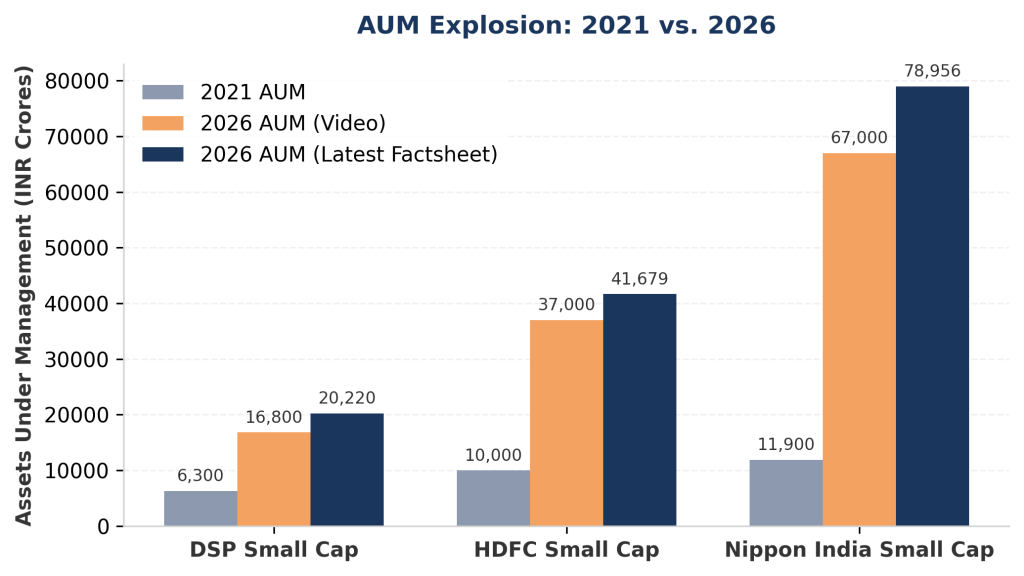
Figure 1: Explosive Assets Under Management (AUM) Growth (2021 to August 2026)
- Asset & Market Cap Allocation Analysis
How do fund managers allocate capital to handle liquidity in times of large market redemptions? While all three funds are ‘true-to-label’ (maintaining the 65% minimum), their allocations show different strategies:
- DSP Small Cap Fund: The purest ‘small-cap play’ among the three. It allocates 90% directly to small-cap stocks, with only 4% in mid-cap and 0% in large-cap stocks. However, to manage high-liquidity demands, DSP currently holds a higher cash/liquid equivalent allocation of around 12.6%.
- Nippon India Small Cap Fund: Because of its massive AUM, the fund manager allocates up to 15% in Large-Cap stocks (such as SBI and HDFC Bank) and 10% in Mid-Caps. This allows the fund to maintain liquidity, as large/mid-cap shares can be quickly liquidated during redemptions without causing market impact.
- HDFC Small Cap Fund: Maintains a balanced 75% in small caps, 10% in mid caps, and 6.6% in large caps. It is also known for holding a robust cash cushion (currently ~9.9%) to manage redemptions proactively.
| Fund Name | Small Cap Allocation | Mid Cap Allocation | Large Cap Allocation | Cash & Equivalents |
|---|---|---|---|---|
| DSP Small Cap Fund | 90.0% | 4.0% | 0.0% | 6.0% (to 12.6% actual) |
| HDFC Small Cap Fund | 75.0% | 10.0% | 6.6% | 8.4% (to 9.9% actual) |
| Nippon India Small Cap | 75.0% | 10.0% | 15.0% | 0.0% (to 2.7% actual) |
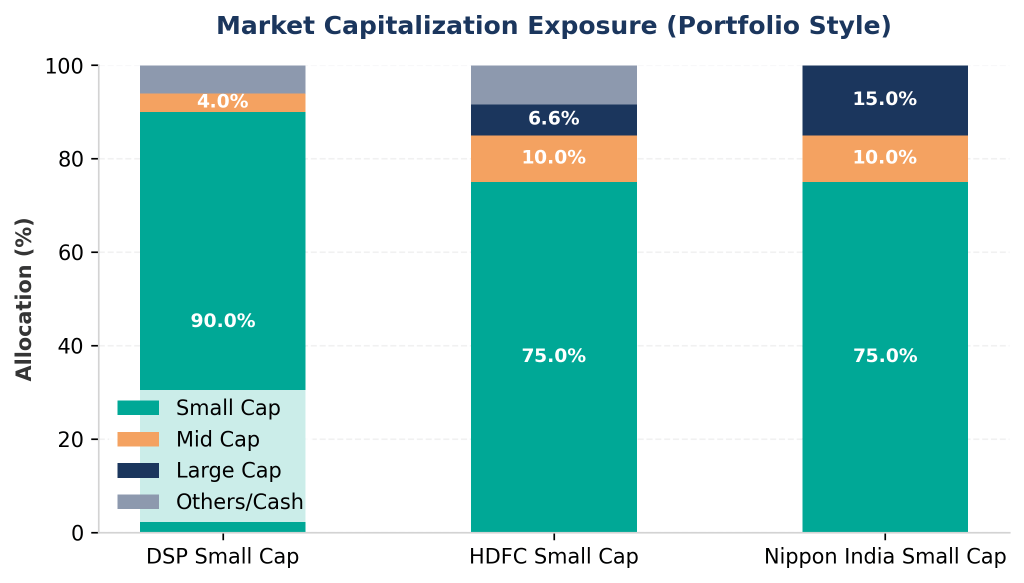
Figure 2: Market Capitalization & Cash Allocations across Portfolios
- Performance & Return Analysis
In small caps, historical returns are highly cyclical. Long-term compounding reveals clear differences:
- Nippon India Small Cap Fund is the undisputed long-term champion, delivering an annualized 23% CAGR over a 5-year period and consistently outperforming its peers and the benchmark index in 7-year and 10-year horizons.
- DSP Small Cap Fund shows strong short-term recovery, leading the YTD and 1-Year returns as of early 2026. Its 3-year and 5-year CAGR stands solid at ~20% per annum, closely tracking the category average.
- HDFC Small Cap Fund has lagging medium-term performance (~17.5% in 3-year), but it displays a defensive ‘value’ tilt. It excels during bear market corrections (such as 2022 and 2025) while lagging during aggressive bull market phases (such as 2024).
| Fund / Index | YTD Return | 1-Year Return | 3-Year CAGR | 5-Year CAGR |
|---|---|---|---|---|
| DSP Small Cap Fund | Best | 20.5% (Best) | 20.0% | 20.0% |
| HDFC Small Cap Fund | Worst | 13.5% (Lagging) | 17.5% | 20.0% |
| Nippon India Small Cap | Moderate | 14.2% | 20.0% | 23.0% (Best) |
| BSE Small Cap Index | Strong | 14.5% | 17.5% | 21.0% |
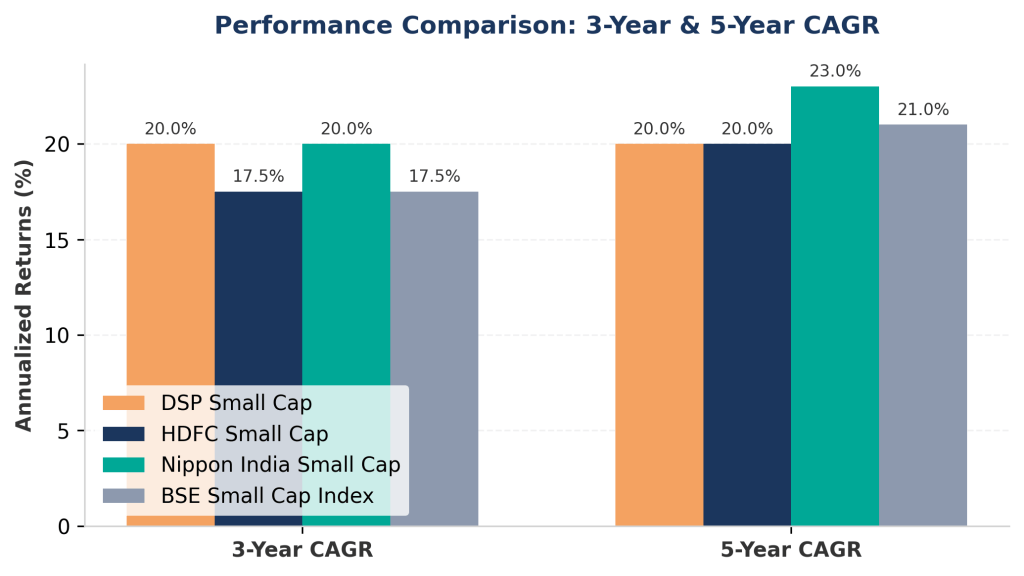
Figure 3: Multi-Period Compounded Annualized Returns (CAGR) Comparison
4. Long-Term Portfolio Holdings & Strategy
A fund’s strategy can be seen in its top long-term holdings and stock churn rates:
- DSP Small Cap operates a focused portfolio with 83 stocks. It prefers high-conviction quality plays held for long durations, such as Lumax Auto Technologies (held for 7-8 years) and Thangamayil Jewellery (held for 5 years).
- HDFC Small Cap maintains 84-89 stocks with a prominent value orientation. Key long-term holdings include Aster DM Healthcare, Firstsource Solutions, and eClerx Services (all held for 7-8 years).
- Nippon India Small Cap has a highly diversified portfolio with 244 stocks to manage its massive 78,956 Cr size. Its top positions include high-conviction compounders like MCX (7-8 years) and Karur Vysya Bank (10 years), alongside large-cap positions such as SBI and HDFC Bank for liquidity buffer.
| Fund Name | Top Long-Term Holdings (Conviction Stocks) | Stock Count | Core Investment Style |
|---|---|---|---|
| DSP Small Cap Fund | Lumax Auto Tech (7-8 yrs), Thangamayil Jewellery, Kirloskar Oil Engines, Sansera Eng. | 83 Stocks | Pure Small Cap, Quality Growth Theme |
| HDFC Small Cap Fund | Aster DM Healthcare (7-8 yrs), Bank of India, Firstsource Solutions, eClerx, Indian Bank | 84-89 Stocks | Defensive Value, Downside Protection |
| Nippon India Small Cap | MCX (7-8 yrs), Karur Vysya Bank (10 yrs), Apar Industries, SBI, HDFC Bank, BHEL | 244 Stocks | Diversified, High-Alpha Growth Play |
Investor Suitability & Conclusion
There is no ‘one-size-fits-all’ fund in the small-cap category. The choice depends entirely on an investor’s risk appetite, volatility tolerance, and view on fund size scaling:
- Nippon India Small Cap Fund: Best for Aggressive, Alpha-Seeking, Long-Term Investors
If your primary goal is maximizing compounding returns over a 7+ year horizon and you are comfortable with the fund’s massive size, Nippon India is the default choice. Samir Rachh has proven that the fund can successfully scale AUM by expanding stock counts (244 stocks) and blending large caps for liquidity, all while maintaining the highest and most consistent Alpha in the category. - HDFC Small Cap Fund: Best for Defensive Investors Seeking Downside Protection
If you are concerned about market overvaluation and want a fund that will protect your capital during deep corrections, HDFC Small Cap is highly suitable. Chirag Setalvad’s value orientation, combined with a lower Beta (~0.79) and a robust cash reserve (~9.9%), ensures that the fund falls significantly less than the index during drawdowns, even if it lags slightly during explosive, momentum-driven bull markets. - DSP Small Cap Fund: Best for Purity Seekers & Lower-AUM Preferences
If you want a ‘pure-play’ small-cap experience without the liquidity overhead of a massive AUM, DSP Small Cap is the ideal choice. By investing 90% in true small-cap names, it offers high small-cap purity. Its smaller size (20,220 Cr) makes it nimble, and its quality-oriented growth approach under Vinit Sambre is well-positioned for the next cycle of high-quality, corporate earnings growth.


Leave a comment