For Indian travellers planning an international trip, one of the most common questions is — “Do I need a visa to visit this country?” The answer depends on the destination, the purpose of travel, and bilateral relations between India and the host country.
Let’s understand where a visa is mandatory, where you can travel visa-free, and why these rules exist.
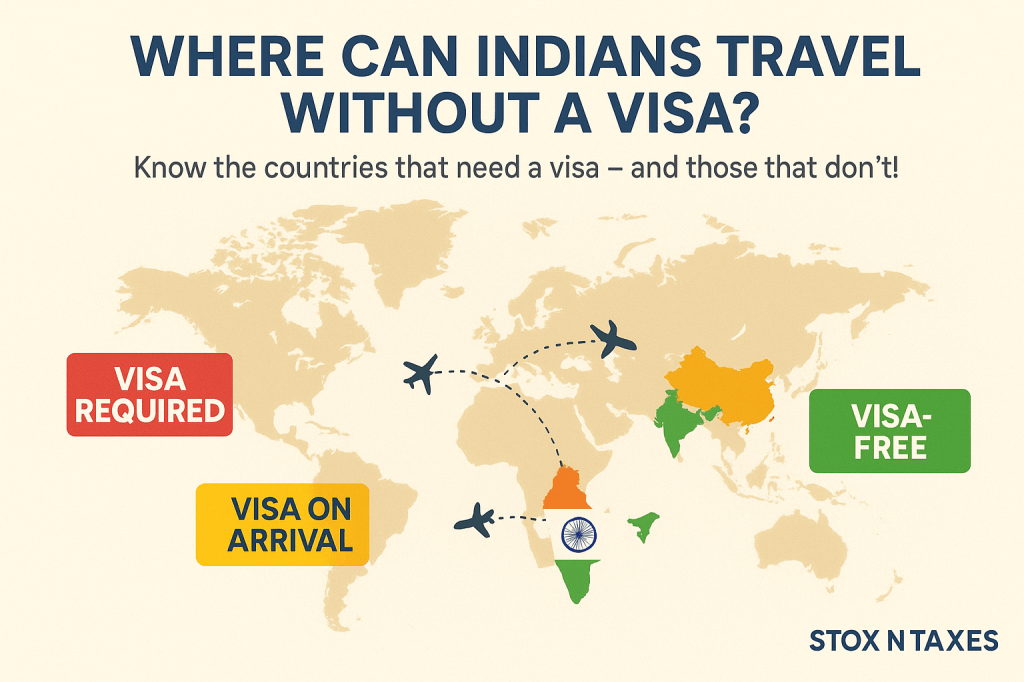
🌍 Countries Where a Visa Is Mandatory for Indians
Most developed nations require Indian citizens to obtain a visa before entry. Here are some key examples:
- United States (US): All Indian travellers need a visa, whether for tourism, study, or work. The US visa process involves an interview and background verification.
- United Kingdom (UK): A pre-approved visa is required for all purposes, including tourism and education.
- Canada: Indians must apply for a Temporary Resident Visa (TRV) or eTA (for certain cases) before travel.
- Schengen Area (Europe): A Schengen visa allows access to 29 European countries including France, Germany, Italy, and Spain.
- Australia & New Zealand: Both require prior visa approval, usually through online submission and document verification.
- China, Japan & South Korea: These Asian countries also require an advance visa application, usually processed through the embassy.
- Saudi Arabia & UAE (for work/long stay): While the UAE offers visa-on-arrival for short tourism in some cases, long-term or work-related visits require a visa beforehand.
🌴 Countries Offering Visa-on-Arrival or e-Visa for Indians
Some friendly nations allow easier entry through visa-on-arrival or e-visa systems, making travel simpler. Examples include:
- Thailand
- Indonesia
- Maldives
- Sri Lanka (eTA)
- Kenya (e-Visa)
- Vietnam (e-Visa)
- Oman & Qatar (e-Visa)
These options are available for short-term stays (usually 30–90 days) and are great for tourism and business trips.
🌎 Visa-Free Countries for Indian Passport Holders (as of 2025)
A few countries allow Indians to enter without a visa for limited durations, such as:
- Nepal and Bhutan – open-border policy
- Barbados, Fiji, Jamaica, Trinidad & Tobago, and Haiti – up to 90 days
- Serbia – 30-day visa-free entry (subject to updates)
These destinations maintain strong diplomatic or historical ties with India, allowing smooth travel experiences.
🛫 Why Do Some Countries Require a Visa?
Visa policies are based on security, immigration control, and reciprocity. Key reasons include:
- Security Concerns: To ensure the traveller poses no threat or risk to national safety.
- Immigration Management: To prevent overstays or illegal employment.
- Reciprocal Policy: If India requires visas for citizens of that country, they often do the same for Indians.
- Verification of Purpose: Visas help verify if travel is for tourism, study, work, or business.
💡 Tip for Travellers
Before booking tickets, always check the latest visa requirements on the official embassy website or the Indian Ministry of External Affairs portal. Visa rules change frequently based on diplomatic relations, security issues, and new agreements.
✅ Conclusion
In short, while Indian passport strength has improved globally, a visa is still mandatory for travel to most developed countries. However, with the rise of e-visa and visa-on-arrival facilities, Indian travellers now enjoy greater convenience than ever before.
If you’re planning international travel, always keep your passport updated and stay informed about visa changes to avoid last-minute hassles.
 Stox N Tax
Leave a comment