Introduction
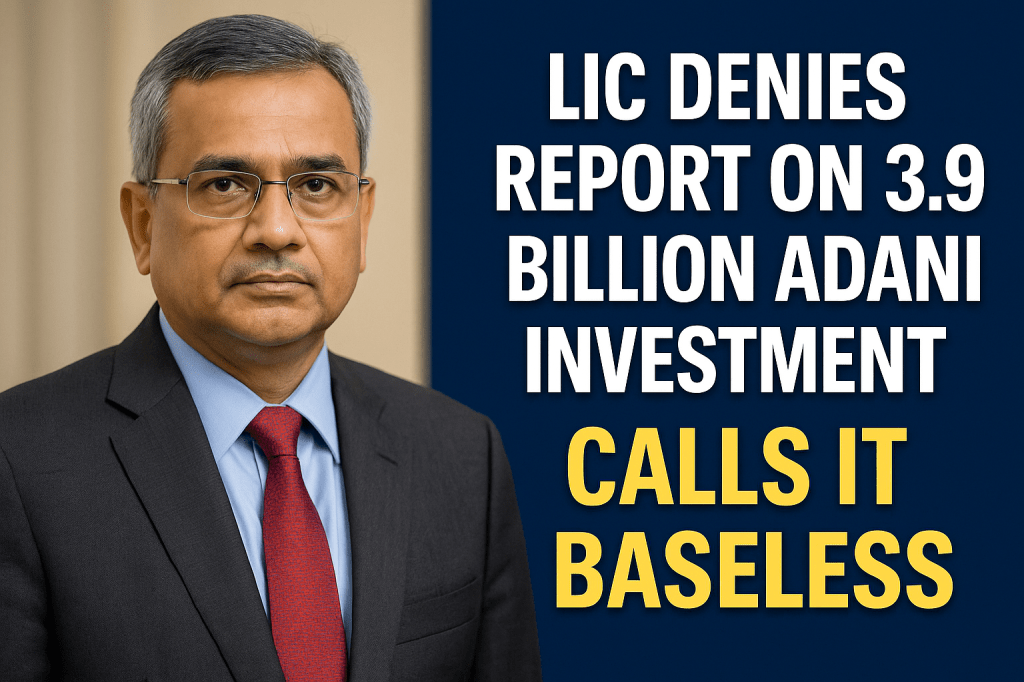
India’s largest insurer, Life Insurance Corporation of India (LIC), has strongly refuted a recent media report alleging that the government directed it to invest around USD 3.9 billion (₹34,200 crore) into companies belonging to the Adani Group. The report, published by The Washington Post, claimed that internal communications between the Finance Ministry, NITI Aayog, and LIC indicated a plan to “steer” funds toward the Adani conglomerate.
LIC, however, called these allegations “false, baseless, and far from truth”, asserting that no external body, including any government department, plays any role in its investment decisions.
LIC’s Official Clarification
In its statement, LIC emphasized that all investment decisions are made independently, based on Board-approved investment policies and rigorous due diligence.
“No external body plays any role in our investment decisions,” the insurer said, adding that “no such document or plan, as alleged in the report, has ever been prepared or discussed by LIC.”
The insurer clarified that it follows strict internal frameworks governed by the Insurance Regulatory and Development Authority of India (IRDAI), ensuring that all investments are compliant, transparent, and in the best interest of policy-holders.
The Allegations Explained
According to The Washington Post, government agencies had drawn up a plan to encourage LIC and other state-run institutions to inject nearly USD 3.9 billion into the Adani Group. The article suggested that the move aimed to stabilize Adani companies after the 2023 market turmoil triggered by the Hindenburg Research report.
The claim raised public concern that policy-holders’ funds were being used to favor specific corporate entities — something LIC’s latest statement firmly denies.
Governance and Market Implications
This controversy highlights broader questions about corporate governance, fiduciary responsibility, and transparency in state-controlled financial institutions.
- Fiduciary Duty: LIC manages over ₹49 lakh crore in assets, representing millions of Indian policy-holders. Any suggestion of political influence could undermine trust in its independence.
- Regulatory Oversight: IRDAI mandates diversification and prudent risk assessment. LIC’s clarification reassures policy-holders that these norms remain intact.
- Market Perception: Allegations of government intervention can affect investor confidence — not just in LIC, but across India’s public-sector financial ecosystem.
- Public Accountability: Opposition parties have reportedly demanded a Public Accounts Committee (PAC) review of the issue, though no official probe has been announced yet.
LIC’s Past Adani Exposure
LIC is known to hold stakes in several Adani Group companies, such as Adani Ports, Adani Enterprises, and Adani Power — all part of its regular investment portfolio. These holdings, however, were made under standard investment procedures, not under any special directive.
The insurer reiterated that such exposures are part of its equity portfolio diversification strategy, similar to other blue-chip investments in large Indian corporates.
Investor and Policy-Holder Takeaway
For the average investor or policy-holder, LIC’s denial brings assurance that:
- Their funds are managed professionally and independently.
- All decisions undergo multi-level scrutiny and are subject to internal and regulatory review.
- LIC remains committed to transparency in its public disclosures.
From an investor’s perspective, this episode serves as a reminder to pay attention to the corporate governance standards of institutions that manage public funds.
Conclusion
The LIC-Adani controversy may continue to attract political and media attention, but the insurer’s firm denial signals an effort to preserve its reputation as a prudent and independent investor. As India’s largest life insurer, LIC’s credibility is vital for maintaining trust among its 29 crore policy-holders and for the stability of India’s broader financial system.
At Stox n Taxes, we believe such developments underline the importance of institutional integrity, policy-holder protection, and independent decision-making — the cornerstones of a healthy financial ecosystem.
Frequently Asked Questions (FAQs)
Q1. What did The Washington Post allege about LIC?
The report alleged that the Indian government had planned to direct LIC’s funds — about USD 3.9 billion — into the Adani Group to support its businesses.
Q2. What was LIC’s response?
LIC categorically denied the claim, calling it false and baseless. The insurer clarified that all investments are made independently, with no external interference.
Q3. Does LIC currently hold Adani Group shares?
Yes, LIC holds equity in various Adani companies as part of its regular investment portfolio. These are routine, policy-driven investments, not the result of external pressure.
Q4. What safeguards ensure LIC’s investment independence?
LIC’s investment process follows IRDAI regulations, Board oversight, and internal due-diligence procedures — ensuring all decisions align with policy-holders’ interests.
Q5. Why is this issue significant?
Because LIC manages a large portion of India’s household savings, any perceived external control over its funds can raise concerns about transparency and financial governance.
Q6. Could this lead to any official investigation?
While some opposition leaders have demanded a probe, no formal investigation has been announced as of now.
Q7. What should investors take from this?
Maintain trust but also stay informed. Understanding where and how public institutions invest is crucial for evaluating market confidence and policy-holder security.
 Stox N Tax
Leave a comment