Table of Contents
- Introduction
- What Is the ₹158 Crore Tax Notice About?
- Why the Tax Department Is Targeting Swiggy
- Swiggy’s Response to the Tax Demand
- Broader Impact on Gig Economy Platforms
- Are Gig Workers at Risk Too?
- Key Sections of Law Involved
- Tax Compliance Tips for Platforms & Freelancers
- Conclusion
- FAQs
1. Introduction
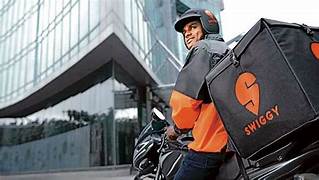
Swiggy, one of India’s largest food delivery platforms, has been served a tax demand of ₹158.25 crore by the Income Tax Department for FY 2021-22. While the notice primarily targets the company, the development has far-reaching implications for gig economy platforms and their partners, including delivery personnel, cloud kitchen vendors, and freelancers.
2. What Is the ₹158 Crore Tax Notice About?
As per Swiggy’s regulatory filing dated April 2, 2025:
- The demand was raised under Section 201(1) and 201(1A) of the Income Tax Act.
- It relates to TDS defaults on:
- Cancellation charges paid to merchants
- Interest income received on tax refunds
The tax department claims Swiggy failed to deduct TDS or deducted it incorrectly, thereby becoming an “assessee-in-default” for those amounts.
3. Why the Tax Department Is Targeting Swiggy
Here’s the breakdown:
- Cancellation charges: When an order is canceled, Swiggy often compensates restaurants. The IT Department treats this payment as business income for the restaurant, on which TDS should have been deducted.
- Interest on tax refunds: If Swiggy received interest from ITD on past tax refunds, that interest is taxable under “Income from Other Sources” and must be declared. The scrutiny likely arose due to incorrect or delayed disclosures.
These lapses have led to the ₹158.25 crore tax demand.
4. Swiggy’s Response to the Tax Demand
Swiggy has stated it:
- Disagrees with the tax position taken by the department
- Believes it has a strong legal case on merits
- Will be filing an appeal to challenge the demand
This follows similar trends seen in cases involving Zomato and other tech platforms where interpretation of TDS rules remains complex.
5. Broader Impact on Gig Economy Platforms
This tax notice is not an isolated event. It is part of a growing pattern:
- Uber and Ola have previously received service tax/GST demands
- Zomato was also under scrutiny for restaurant-level TDS defaults
- Freelancer platforms are seeing TDS notices for payments made to unregistered professionals
Platforms can no longer treat such payments as “non-taxable” simply because they’re compensatory or indirect.
6. Are Gig Workers at Risk Too?
Yes — indirectly. Here’s how:
- Restaurants, freelancers, and delivery partners may be questioned if Swiggy passes the buck
- If TDS wasn’t deducted, ITD may pursue the recipient (merchant) to pay tax with interest and penalties
- Freelancers and influencers working with platforms like Swiggy may also see more compliance scrutiny
Example: A restaurant receiving ₹10 lakh in cancellation compensation may now be liable to self-disclose and pay advance tax.
7. Key Sections of Law Involved
| Section | Provision |
|---|---|
| 201(1) | Failure to deduct TDS – payer deemed assessee-in-default |
| 201(1A) | Interest payable on TDS not deducted or late deduction |
| 194C/194H/194J | Commonly applicable TDS sections for service providers, commission agents, professionals |
| 56(2)(ix) | Income from interest on refunds to be declared under IFOS |
8. Tax Compliance Tips for Platforms & Freelancers
For Platforms like Swiggy:
- Review all indirect payouts, cancellation credits, refund interests
- Ensure TDS applicability checks are automated in systems
- Reconcile refund interest and declare it correctly in ITRs
For Gig Workers & Vendors:
- Treat any form of platform payment as taxable unless explicitly exempt
- File accurate returns and claim TDS credit if deducted
- If receiving more than ₹30,000 from a single platform, watch out for Section 194C/194J TDS
9. Conclusion
The ₹158 crore notice to Swiggy is a wake-up call for the entire gig economy. As the government tightens tax surveillance, platforms can no longer afford aggressive interpretations, and vendors must stay alert to their own compliance responsibilities.
Expect more such notices in the future, and proactive tax planning is now essential — whether you’re a platform, a food vendor, a content creator, or a delivery partner.
10. FAQs
Q1. Will this tax notice affect Swiggy users?
A: No. This notice relates to corporate tax compliance, not user transactions.
Q2. Do restaurants have to report cancellation charges as income?
A: Yes. Any amount received, even as a “compensation,” is taxable unless explicitly exempt.
Q3. Can gig workers avoid TDS?
A: If their income is under thresholds, yes. But platforms often deduct TDS above ₹30,000 per section rules.
Q4. What if a platform doesn’t deduct TDS from you?
A: You are still liable to report the full income and pay tax on it yourself.
Q5. What is Section 201(1)?
A: It treats the deductor as an “assessee-in-default” for failing to deduct TDS correctly or at all.
 Stox N Tax
Leave a comment