Abstract
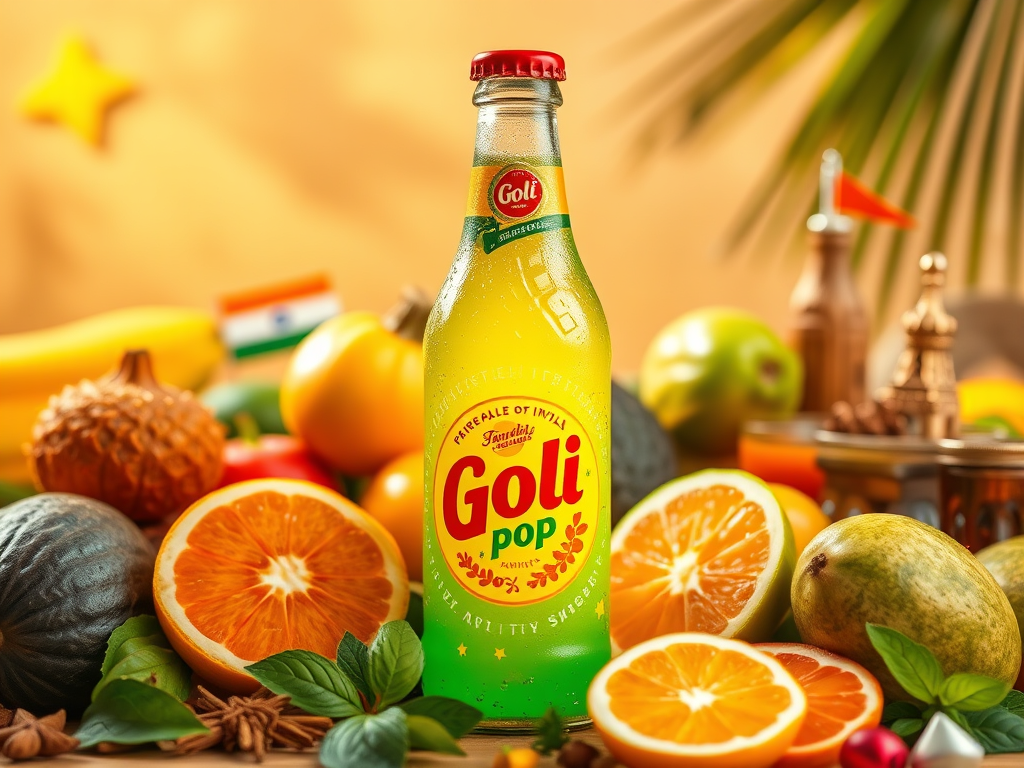
The resurgence of India’s traditional Goli Soda, now rebranded as Goli Pop Soda, signifies a pivotal development in the promotion of indigenous beverages on the global stage. This article delves into the strategic initiatives undertaken to reintroduce this iconic drink to international markets, the regulatory frameworks governing such exports, and the broader implications for India’s beverage industry. The discussion encompasses the roles of key organizations, compliance with export regulations, and the impact on India’s cultural and economic landscape.Press Information Bureau+1Press Information Bureau+1
Introduction
Goli Soda, characterized by its unique marble-sealed bottle, has been a quintessential part of India’s beverage culture. However, with the influx of multinational beverage companies, its presence dwindled over the years. The recent revival and rebranding as Goli Pop Soda, facilitated by the Agricultural and Processed Food Products Export Development Authority (APEDA), mark a significant stride in promoting India’s homegrown beverages globally. Press Information Bureau
Strategic Initiatives and Market Penetration
The successful reintroduction of Goli Pop Soda into international markets, including the USA, UK, Europe, and Gulf countries, is a testament to strategic partnerships and targeted marketing. Collaborations with entities like Fair Exports India have ensured steady supplies to prominent retail chains such as Lulu Hypermarket in the Gulf region. In the UK, the beverage has evolved into a cultural phenomenon, appealing to consumers who appreciate a fusion of traditional Indian flavors with modern appeal. Press Information Bureau+1Press Information Bureau+1
Regulatory Framework and Compliance
The export of food and beverage products from India is governed by a comprehensive regulatory framework to ensure quality and safety. Key regulations include:
- Food Safety and Standards Authority of India (FSSAI): Sets standards for food products, ensuring they are safe for consumption. Compliance with FSSAI standards is mandatory for domestic sales and exports.
- Export Inspection Council (EIC): Ensures that products meet the requirements of importing countries. Certification from EIC is often required for agricultural and processed food exports.
- APEDA: Established under the APEDA Act of 1985, it promotes the export of agricultural and processed food products. APEDA provides guidelines, financial assistance, and ensures adherence to quality standards for products like Goli Pop Soda.Press Information Bureau+1Press Information Bureau+1
Intellectual Property and Branding
Rebranding Goli Soda as Goli Pop Soda necessitates compliance with intellectual property laws to protect trademarks and branding elements. Registering trademarks with the Controller General of Patents, Designs, and Trademarks in India ensures legal protection against infringement. Additionally, adhering to international trademark protocols, such as the Madrid System, facilitates protection in export markets.Press Information Bureau
Quality Assurance and Packaging Standards
Adherence to international quality and packaging standards is crucial for acceptance in global markets. This includes compliance with ISO standards for food safety management systems (ISO 22000) and packaging (ISO 15378). Innovative packaging, featuring a unique pop opener that recreates the nostalgic fizzy burst, has been pivotal in capturing consumer interest abroad. ICAIPress Information Bureau
Cultural Significance and Economic Impact
The revival of Goli Soda transcends commercial aspects, serving as a conduit for cultural diplomacy. It showcases India’s rich culinary heritage, fostering a sense of nostalgia among the diaspora and introducing global consumers to traditional Indian flavors. Economically, it opens new avenues for farmers and small-scale manufacturers involved in the supply chain, aligning with the government’s ‘Make in India’ initiative.Press Information Bureau+1Press Information Bureau+1
Challenges and Mitigation Strategies
While the global acceptance of Goli Pop Soda is promising, several challenges persist:
- Regulatory Barriers: Navigating the complex regulatory landscapes of different countries requires meticulous planning and compliance. Engaging local legal experts and consultants can facilitate smoother market entry.
- Supply Chain Management: Ensuring consistent quality and supply necessitates robust logistics and inventory management systems. Implementing advanced supply chain technologies can mitigate potential disruptions.
- Cultural Sensitivity: Tailoring marketing strategies to resonate with diverse cultural sensibilities without diluting the brand’s identity is crucial. Conducting market research and employing culturally aware advertising can enhance brand acceptance.
Future Prospects and Recommendations
The success of Goli Pop Soda sets a precedent for other indigenous Indian beverages to explore global markets. Recommendations for stakeholders include:Press Information Bureau
- Diversification: Introducing new flavors that cater to regional tastes can broaden the consumer base.
- Sustainability: Adopting eco-friendly packaging and sustainable sourcing practices can enhance brand image and appeal to environmentally conscious consumers.
- Digital Marketing: Leveraging social media and e-commerce platforms can increase brand visibility and accessibility in international markets.
Economic and Financial Implications of Goli Pop Soda’s Global Revival: A Financial Perspective
The reintroduction of India’s traditional Goli Soda, now rebranded as Goli Pop Soda, into global markets is not merely a sentimental exercise—it is a well-timed strategic move with tangible economic and fiscal benefits. This revival carries significant implications for India’s FMCG sector, rural entrepreneurship, agricultural exports, foreign exchange earnings, and soft power diplomacy.
Let us explore the multi-dimensional economic benefits, as any prudent finance professional would:
1. Contribution to GDP through Value Addition in Agro-Processing
From a macroeconomic standpoint, processed food and beverages fall under the manufacturing component of the Gross Value Added (GVA). The agro-processing sector in India has a multiplier effect—converting low-value agricultural inputs (fruit concentrates, natural sweeteners, carbonated water) into high-value finished beverages like Goli Pop Soda.
- According to the Ministry of Food Processing Industries (MoFPI), every ₹1 crore invested in food processing generates direct and indirect employment for around 50 persons and leads to significant GDP contribution through backward linkages.
- This initiative aligns with India’s goal of increasing the share of processed food exports, which currently stands below its global potential.
2. Boosting MSMEs and Employment Generation
Goli Pop Soda’s production and packaging involve multiple micro and small enterprises (MSMEs)—from glass bottle makers and rural bottling units to logistics providers. The campaign encourages rural employment, especially among semi-skilled youth in Tier-2 and Tier-3 cities.
- Government schemes like PMFME (Pradhan Mantri Formalization of Micro Food Processing Enterprises) can provide further credit and capacity building support to such entrepreneurs.
- Job creation in local manufacturing reduces rural-urban migration and supports inclusive economic development.
3. Export Revenue and Foreign Exchange Inflows
From a foreign trade perspective, exporting Goli Pop Soda to the US, UK, Europe, and Gulf markets directly contributes to India’s merchandise exports under the processed food and beverages category.
- India’s processed food exports are projected to cross $50 billion by 2030 (APEDA projection). Products like Goli Pop Soda can tap into the $1.5 trillion global soft drinks market, even if at a niche level initially.
- This translates into foreign exchange inflows, thereby strengthening the rupee, improving India’s current account balance, and reducing pressure on foreign reserves.
4. Branding and Soft Power Diplomacy: Enhancing India’s Economic Image
A less quantifiable but equally important benefit is the promotion of Brand India. As Goli Pop Soda becomes symbolic of India’s innovation and cultural heritage, it enhances India’s perception globally—not just as a tech powerhouse but as a cultural exporter.
- This improves investor confidence, facilitates FDI in the FMCG and beverage sectors, and indirectly contributes to India’s economic diplomacy goals.
5. Tax and Regulatory Compliance Uplift
As businesses involved in the supply chain formalize for exports, they enter the GST network, expand their digital footprints, and enhance tax compliance.
- Increased exports and profitability will translate into higher corporate income tax, GST collections, and customs duties where applicable.
- The participation of entities like FSSAI, APEDA, and DGFT ensures robust regulatory compliance and improves India’s ranking on Ease of Doing Business and Global Food Safety Index.
6. Encouraging Domestic Demand Through Nostalgia-Driven Consumption
The rebranding of Goli Pop Soda is not limited to exports—it has strong potential to create domestic demand revival in urban and semi-urban markets. The surge in nostalgia-driven FMCG products post-COVID is a market trend that Indian entrepreneurs can leverage.
- Increased domestic consumption, especially among Gen Z and millennials looking for “roots with a twist,” expands internal trade, benefiting local economies.
Conclusion: A Micro Product with Macro Impact
What seems like the simple rebranding of a childhood drink is, in financial terms, a catalyst for MSME growth, export diversification, employment generation, and soft power projection.
As Chartered Accountants, policymakers, and business consultants, we must view such initiatives through a strategic economic lens. With the right enablers—credit access, regulatory support, global trade facilitation—products like Goli Pop Soda can be case studies in how culture meets commerce to drive economic growth.
Conclusion
The global resurgence of Goli Pop Soda exemplifies the potential of India’s indigenous products in the international arena. Through strategic collaborations, stringent compliance with regulatory standards, and innovative marketing, Goli Pop Soda has not only revived a nostalgic beverage but also paved the way for other traditional products to gain global recognition. This initiative underscores the importance of preserving cultural heritage while adapting to contemporary market dynamics, contributing to India’s economic growth and cultural diplomacy.
References
- Food Safety and Standards Authority of India. (2025). Food Safety and Standards Regulations. Retrieved from https://www.fssai.gov.in/
- Export Inspection Council of India. (2025). EIC Certification Process. Retrieved from https://eicindia.gov.in/
- Intellectual Property India. (2025). Trademark Registration Guidelines. Retrieved from https://ipindia.gov.in/
- International Organization for Standardization. (2025). ISO 22000: Food Safety Management Systems. Retrieved from https://www.iso.org/iso-22000-food-safety-management.html
 Stox N Tax
Leave a comment