1. Introduction
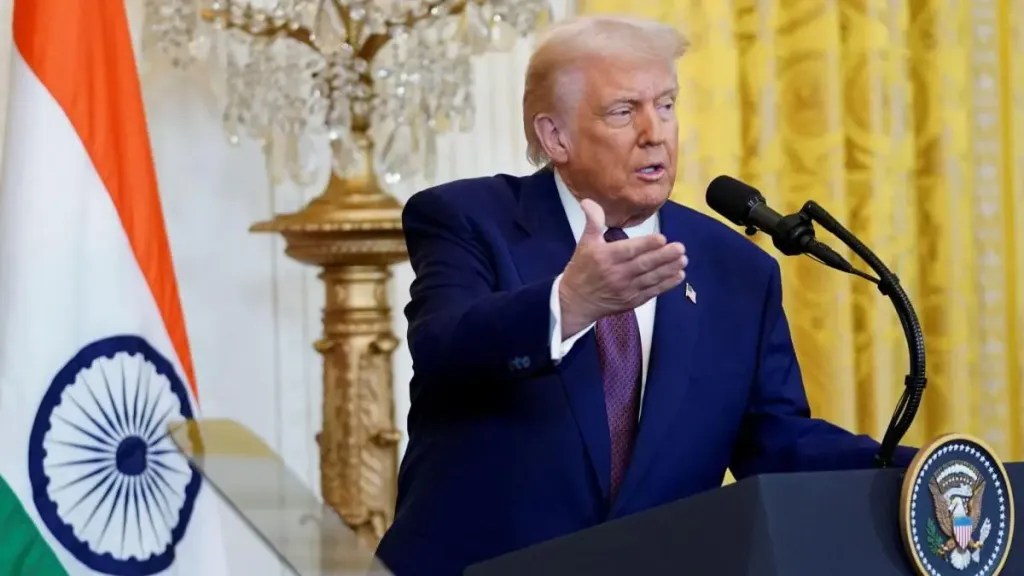
In April 2025, former U.S. President Donald Trump, campaigning for re-election and promoting his “America First 2.0” agenda, unveiled an aggressive set of universal and country-specific tariffs—what he calls the “Liberation Tariffs.” These measures, much like his 2017–2020 protectionist policies, aim to reduce the U.S. trade deficit and bring back domestic manufacturing jobs. However, the new round of tariffs is broader and more disruptive in its design, extending to all trading partners regardless of bilateral trade balances or strategic ties.
As Chartered Accountants and finance professionals, it becomes imperative not only to evaluate the economic and sectoral impact but also to consider a deeper financial motive: Could this be a backdoor refinancing exercise to reduce U.S. debt cost and restructure its public borrowing?
This article comprehensively evaluates the latest tariff measures, global economic responses, India’s specific exposures, and the hidden financial engineering possibly embedded in this economic strategy.
2. Trump’s 2025 Tariff Measures – A Summary
2.1. Key Announcements
- Baseline Universal Tariff: 10% imposed on all U.S. imports.
- Selective Country-Specific Tariffs:
- China: 145%
- Vietnam: 46%
- Japan: 24%
- European Union: 20%
- Canada and Mexico: 25%, with certain waivers under USMCA.
- Imposed under International Emergency Economic Powers Act, citing persistent trade imbalances and “economic aggression.”
2.2. Initial Market and Political Response
- Dow Jones dropped ~4,000 points in two trading sessions.
- Global indices (FTSE, Nikkei, Nifty) recorded sharp volatility.
- Analysts and policy forums called it the “Second Great Trade Disruption” post-COVID-19.
3. The Global Economic Repercussions
3.1. Disrupted Supply Chains
- Multinational companies are re-evaluating their Asia-centric procurement models.
- China-centric production is being partially diversified to ASEAN, India, and Eastern Europe.
3.2. GDP and Inflation Pressures
- Penn Wharton estimates a real GDP reduction of 7–8% in the U.S. over the next 3 years.
- Imported inflation likely in both the U.S. and retaliating nations due to cascading cost effects.
3.3. Trade Retaliations and WTO Risks
- China, the EU, and other major economies are considering countermeasures.
- WTO faces renewed relevance as disputes surge; India is likely to leverage this multilateral platform to challenge tariff legality.
4. Could This Be a Refinancing Game?
4.1. Context: U.S. Debt and Fiscal Pressure
The U.S. federal debt crossed $35 trillion in Q1 2025, with Treasury yields climbing due to persistent deficits and rising interest rates. Servicing costs for U.S. debt are at a record $1.1 trillion annually, threatening future fiscal stability.
4.2. Tariffs as a “Backdoor Tax”
Tariffs are collected by U.S. Customs from importers, not foreign governments. In practice, U.S. consumers and businesses bear the brunt, making it an indirect form of taxation.
- Revenue Impact: 2024 U.S. customs duties totaled $93 billion. Trump’s new tariff measures could triple this figure, generating over $250–300 billion annually.
- This new non-debt revenue stream may ease pressure on fiscal borrowing.
4.3. Debt Repricing Possibility
By bolstering government cash flows and improving fiscal optics, this strategy might:
- Temporarily reduce fresh bond issuances.
- Enable rollover at better terms through strategic negotiation with institutional investors.
- Reduce the yield curve steepness and enhance Treasury auction participation.
4.4. A Strategic Fiscal Engineering?
This raises a legitimate financial question:
Are these tariffs truly about trade rebalancing, or are they a fiscal repositioning tool cleverly camouflaged as protectionist policy?
In a world where central banks have limited ammunition, the executive might resort to unconventional tools—including tariffs as a debt refinancing strategy—without directly labeling it as such.
5. Impact on the Indian Economy
5.1. Trade Exposure and Sectoral Risk
- The U.S. is India’s largest export market (~$77 billion in FY 2024-25).
- Sectors exposed: Textiles, auto parts, gems & jewellery, pharma, IT services.
- Tariff-induced cost inflation will affect Indian exporters, especially SMEs.
5.2. Potential Gains from Trade Diversion
- India may absorb manufacturing orders shifted from China and Vietnam.
- PLI schemes, simplified customs processes, and state-level industrial policies could help India gain strategic share in:
- Electronics and semiconductors
- API and chemical intermediates
- Consumer durables
5.3. Currency and Capital Market Volatility
- Anticipated rupee pressure due to capital outflows.
- Nifty50 may see sectoral divergence: IT and Pharma defensive; export-intensive sectors vulnerable.
6. Indian Government’s Policy Responses
6.1. Bilateral and Multilateral Diplomacy
- India is likely to seek special sectoral exemptions via bilateral negotiations.
- Strategic use of WTO frameworks to dispute tariff legality under GATT rules.
6.2. Incentives and Export Support
- Strengthening RoDTEP and SEIS schemes.
- Fast-tracking FTA talks with UK, EU, and Canada.
6.3. Trade and Tariff Counterbalance
- Under the Customs Tariff Act, 1975, India may consider:
- Proportional retaliatory tariffs.
- Product-level quota restrictions.
7. Recommendations for Indian Businesses and Investors
| Stakeholder | Actionable Insights |
|---|---|
| Exporters | Hedge against U.S. exposure; explore ASEAN and EU diversification. |
| Importers | Monitor input cost inflation; leverage FTAs to optimize sourcing. |
| Investors | Diversify portfolios; monitor Fed policies and U.S. debt dynamics. |
| Policy Advocates | Push for synchronized fiscal + monetary trade response. |
8. Conclusion
Trump’s 2025 tariff wave may reshape the world economy more aggressively than in the previous decade. While marketed as a means to revive domestic industry, a deeper reading reveals that it could very well be a sophisticated fiscal maneuver—a hidden attempt to reduce the cost of sovereign debt servicing under the guise of protectionism.
For India, the path ahead involves measured diplomacy, strategic industry incentivization, and supply chain agility. Chartered Accountants, CFOs, and policy advisors must decode not only the apparent trade dynamics but also the monetary, fiscal, and geo-economic undercurrents that may define the next decade.
 Stox N Tax
Leave a comment