Introduction
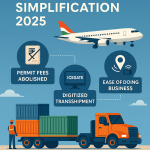
In the Union Budget 2025-26, the Hon’ble Finance Minister placed special emphasis on augmenting India’s air cargo infrastructure and streamlining the protocols surrounding cargo screening and customs clearance. Pursuant to these policy objectives, the Central Board of Indirect Taxes and Customs (CBIC) issued Circular No. 15/2025-Customs dated 25th April 2025. This Circular signifies a major step towards further simplification and digitization of air cargo handling, specifically targeting the movement and transshipment of goods, with an eye on ease of doing business.
This article comprehensively analyses the key changes introduced, the relevant legal provisions amended, practical implications, compliance requirements, and the broader impact on stakeholders.
Background: Customs Modernization Initiatives
In recent years, CBIC has undertaken substantial reforms, such as:
- Digitization of trade documentation.
- Strengthening Risk Management Systems (RMS).
- Expansion of the Authorised Economic Operator (AEO) Programme.
- Standardization of customs procedures across ports.
These initiatives contributed positively to India’s performance in the National Time Release Study (NTRS), demonstrating significant reductions in clearance times for both imports and exports.
Key Changes Introduced Under Circular No. 15/2025-Customs
1. Abolition of Transshipment Permit Fees
- Previous Provision: Under the Goods Imported (Conditions of Transshipment) Regulations, 1995, a fee of Rs. 20/- was levied per transshipment permit.
- Amendment: Effective from Notification No. 30/2025-Customs (N.T.) dated 24th April 2025, this fee is now abolished.
- Impact:
- Reduction in compliance cost for airlines, consol agents, and logistics providers.
- Faster processing times at customs stations.
- Boost to seamless cargo movement between customs stations.
Relevant Law: Goods Imported (Conditions of Transshipment) Regulations, 1995 (as amended).
2. Harmonization of Procedures for Unit Load Devices (ULDs)
The movement of Unit Load Devices (ULDs) outside customs areas has been harmonized along the lines of marine container procedures.
- Procedure for ULDs:
- Temporary import permitted on execution of a “Continuity Bond” by air carriers or air console agents.
- If ULDs are affixed with tracking devices/data loggers, such devices must have Unique Identity Numbers (UINs) recorded at the time of import.
- Devices may use Bluetooth and battery-powered technology.
- Mandatory compliance with BCAS (Bureau of Civil Aviation Security) regulations.
- Proof of export of ULDs within the stipulated period is the responsibility of the carrier or console agent.
- Clarifications Provided:
- Exemption under Notification No. 104/94-Customs is not available for tracking devices imported separately (i.e., not affixed to ULDs).
- Importers other than air carriers/console agents must continue to comply with Circular No. 51/2020-Customs dated 20.11.2020 for temporary imports.
Relevant Notifications/Circulars:
- Notification No. 104/94-Customs
- Circular No. 31/2005-Customs
- Circular No. 51/2020-Customs
3. Strengthening National Transshipment Bond Framework
- Background: All-India National Transshipment Bond (NTB) for air imports was introduced in 2022 to eliminate the need for airlines to furnish multiple bonds across stations.
- Update:
- Facility of transshipment requests is now enabled electronically through ICEGATE (Indian Customs Electronic Gateway).
- Airlines and agents are encouraged to use ICEGATE, eliminating the necessity of visiting service centers at airports.
- Impact:
- Centralized and uniform bond management.
- Significant reduction in administrative burden.
- Streamlining of movement of transshipped cargo across customs stations.
Relevant Law: Customs Act, 1962 (Section 30, 33, 34, and 45).
Practical Implications for Stakeholders
| Stakeholder | Impact |
|---|---|
| Airlines and Cargo Agents | Lower cost, faster transshipment, lesser procedural hurdles |
| Freight Forwarders | Simplified ULD movement, streamlined documentation |
| Exporters/Importers | Faster cargo clearance, improved logistics reliability |
| Customs Department | Better compliance monitoring through digitization |
Compliance Requirements
- Execution of Continuity Bond: Mandatory for carriers/consol agents for temporary import of ULDs.
- Maintenance of Proof of Export: Essential to prevent liabilities under Customs Act.
- Device Identification: Unique Identity Number (UIN) tagging and proper documentation for tracking devices.
- Adherence to Aviation Security: Strict compliance with BCAS guidelines for devices involving wireless communication.
- Use of ICEGATE Platform: Timely registration and active use by all air-transhippers.
Challenges and Points to Watch
- Training Requirement: Field officers and airline staff must be sensitized to the new digital procedures.
- Compliance Tracking: Mechanisms must be in place for monitoring the timely re-export of ULDs.
- Device Certification: Possible need for certification of Bluetooth-enabled devices as per DGCA/BCAS norms.
- Bond Monitoring: Proper tracking to ensure continuity bonds are effectively enforced.
Conclusion
Circular No. 15/2025-Customs represents another significant stride towards making India’s air cargo logistics internationally competitive. By abolishing outdated fees, harmonizing ULD handling with global practices, and strengthening the digital interface through ICEGATE, CBIC has demonstrated its commitment to ease of doing business.
However, to realize the full benefit of these reforms, proactive compliance by stakeholders and responsive implementation by Customs field formations is crucial. Continuous dialogue between trade bodies, airlines, customs authorities, and policy-makers will ensure that India’s air logistics sector evolves to match the demands of a fast-growing economy.
In an era where logistics efficiency directly correlates with economic growth, such thoughtful regulatory simplifications are not just welcome, but absolutely essential.
 Stox N Tax
Leave a comment