I. Introduction
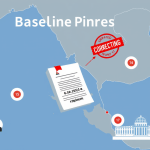
On 22nd April 2025, the Ministry of External Affairs issued a corrigendum via G.S.R. 253(E) to correct a typographical or factual error in a prior notification G.S.R. 216(E) dated 2nd April 2025. This correction pertained to the substitution of “BASELINE POINT 15” with “BASELINE POINT 17” under the heading “Geographical Name” in the Schedule, Serial No. 16.
While such a change may appear trivial on the surface, corrigenda published in the Gazette of India are binding and hold legal sanctity. For professionals involved in international contracts, defence supplies, geopolitical mapping, environmental clearances, and financial reporting, these corrections could significantly impact documentation accuracy, compliance, and due diligence.
II. Understanding the Nature and Importance of Corrigenda
Corrigenda are official rectifications to earlier notifications, rules, or orders. As per Section 21 of the General Clauses Act, 1897, the authority that issued an original order has the implicit power to amend or rescind it. Hence, corrigenda are a legitimate and legally recognized part of regulatory governance.
Implications:
- Corrective Mechanism: Avoids misapplication or misinterpretation of a legal provision.
- Legal Validity: Once published in the Gazette, the corrected version is deemed the authoritative one.
- Stakeholder Impact: May affect foreign treaties, border documentation, and financial disclosures where geographical accuracy is pivotal.
III. Relevance to Financial, Legal, and Regulatory Professionals
A. Chartered Accountants and Statutory Compliance
For a Chartered Accountant (CA) practicing in areas such as:
- Cross-border taxation
- Foreign investments (FEMA)
- Environmental due diligence
- Maritime logistics and SEZ advisory
…accurate reference to government notifications and their corrected versions is critical for:
- Proper due diligence reporting
- Preparation of legal opinions
- Project finance documentation where geographic benchmarks are key
- Assessing jurisdictional liabilities (especially in cases involving international waters or boundaries)
B. Company Law and FEMA Impact
If a company’s operations are tied to Special Economic Zones (SEZs) or border development projects, even minor changes in geographic identifiers (e.g., Baseline Points, Coordinates) could:
- Alter territorial jurisdiction
- Influence customs duty rates
- Shift maritime boundary rights (relevant under UNCLOS and DG Shipping rules)
- Require updates in project reports filed with RBI, SEBI, or MCA
IV. Practical Scenarios Where Corrigendum Could Be Crucial
Scenario 1: Export Oriented Unit in a Coastal SEZ
A company with bonded warehouse operations in a coastal SEZ relies on precise baseline point data to ascertain the legality of cargo handling limits. An incorrect reference to “Baseline Point 15” may expose the unit to potential customs violations, whereas “Baseline Point 17” might lie within permissible boundaries.
Scenario 2: Project Appraisal under International Treaties
Suppose an infrastructure project’s Environmental Impact Assessment (EIA) mentions coordinates derived from an outdated gazette notification. If challenged in litigation, the corrigendum (even if minor) can serve as crucial evidence to validate project parameters.
V. Corrigendum and Mapping Laws: A Wider Outlook
The notification’s content affects not only legal compliance but also touches upon:
- The Baseline Notification Scheme under India’s Maritime Zones Act, 1976
- UNCLOS conventions
- Satellite mapping validations under ISRO and Survey of India protocols
- Defense boundary alignment for naval and strategic installations
Correcting a baseline point has the potential to shift the territorial sea, contiguous zone, or Exclusive Economic Zone (EEZ), which directly affects:
- Sovereignty rights
- Natural resource extraction
- Trade routes
VI. Documentation and Internal Controls for CA Firms
To mitigate compliance risks, CA firms should:
- Maintain an internal gazette tracker or regulatory change log.
- Implement checklists for corrigenda updates while issuing certificates, opinions, or due diligence reports.
- Integrate gazette updates into ERP or document review systems (especially those related to legal metrology, environment, FEMA filings, and border trade).
VII. Conclusion
While G.S.R. 253(E) may correct just a single term — substituting “BASELINE POINT 15” with “BASELINE POINT 17” — the broader implications are manifold. For Chartered Accountants and compliance professionals, vigilance toward such notifications is vital. Regulatory compliance today isn’t merely about tax filings — it’s about multidimensional legal awareness that spans borders, treaties, and geographic realities.
In the era of globalized audits and ESG-driven transparency, the devil lies in the detail — and often, that detail lies in a corrigendum.
🔖 Key Legal Reference
- General Clauses Act, 1897 – Section 21
- Maritime Zones of India (Regulation of Fishing by Foreign Vessels) Act, 1981
- FEMA, SEZ Rules, Customs Act – Cross-border geography linked compliance
 Stox N Tax
Leave a comment