The trade relationship between India and the United States has always been a mix of collaboration and competition. In recent years, tariff disagreements have escalated into what many call a ‘trade and tariff war.’ This dispute, influenced by global economic shifts, domestic priorities, and diplomatic strategies, impacts not only large corporations but also small businesses and consumers in both countries.
Background of the Dispute
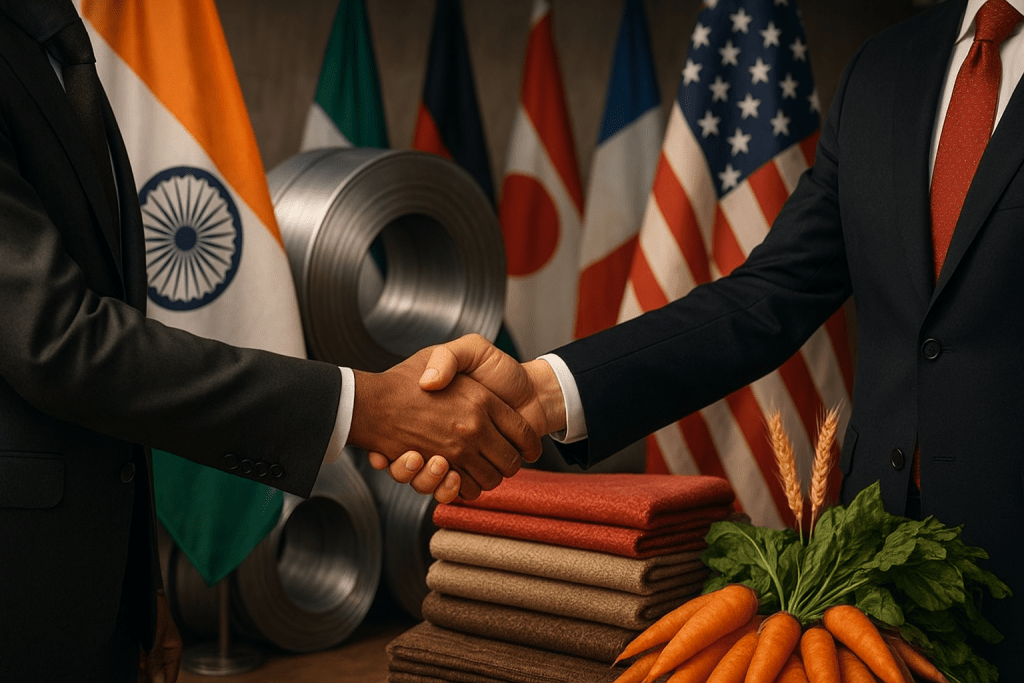
The India–USA trade relationship has been growing for decades. However, the introduction of tariffs and counter-tariffs in sectors like steel, aluminium, textiles, and agricultural goods has strained ties. The United States imposed higher duties on certain Indian exports, citing market imbalances and the need to protect domestic industries. India responded with its own set of tariffs on American goods, sparking tensions.
Current Scenario (August 2025)
As of August 2025, both nations are engaged in ongoing negotiations to reduce trade barriers. While some tariffs have been lowered, others remain due to unresolved disputes. Key sectors affected include technology products, medical devices, agricultural exports, and textiles. Both governments have emphasised the importance of a fair and balanced trade agreement.
Impact on Businesses and Consumers
For Indian exporters, especially in the agricultural and textile sectors, higher tariffs mean reduced competitiveness in the US market. Conversely, American exporters of technology and medical equipment face increased costs when selling to India. Consumers in both countries are also feeling the impact, with prices of imported goods rising.
Diplomatic and Policy Efforts
Diplomatic channels remain active, with trade delegations from both sides meeting frequently. The World Trade Organization (WTO) has been involved in some disputes, but both countries appear committed to resolving issues through direct talks. New agreements on digital trade, intellectual property protection, and climate-focused trade policies are also on the table.
Future Outlook
The future of India–USA trade relations will depend on how both nations balance protectionist policies with the need for mutual economic growth. A potential agreement that addresses tariff concerns while promoting technology exchange and sustainable practices could set the stage for a stronger partnership.
FAQs on India–USA Trade and Tariff War
Q1: What triggered the India–USA trade war? The dispute began when the US imposed higher tariffs on Indian steel and aluminium exports, prompting India to retaliate with tariffs on American goods.
Q2: Which sectors are most affected? Key sectors include steel, aluminium, textiles, agricultural products, technology, and medical devices.
Q3: How does this impact consumers? Consumers in both countries may face higher prices on imported goods due to tariffs.
Q4: Is there a possibility of resolution soon? Negotiations are ongoing, and while some progress has been made, a complete resolution will take time.
Q5: What role does the WTO play? The WTO acts as a mediator in disputes, but both countries are currently focusing on bilateral talks.
 Stox N Tax
Leave a comment